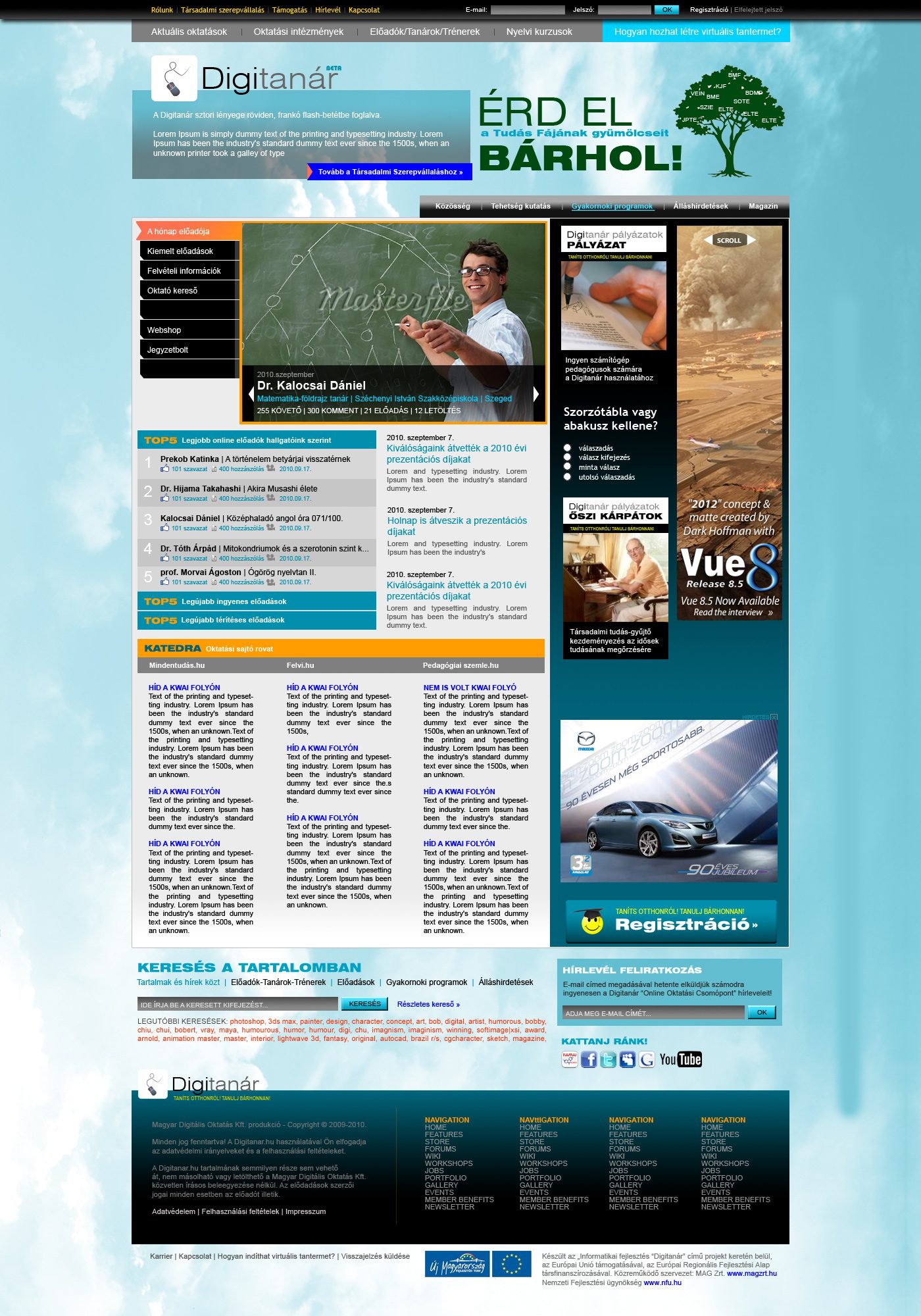
Digitanár
The Concept: Digitanár ("Digital Teacher") was a full EdTech ecosystem — concept, full-stack architecture, and execution — built with a 17-person multidisciplinary team under Magyar Digitális Oktatás Kft. The platform combined a vertical marketplace for educators with early online telepresence integration, aiming to democratize access to quality education across Hungary.
The system featured live virtual classrooms with real-time video, chat, and interactive presentation tools — at a time when this was technically challenging and socially unfamiliar. The platform enabled teachers to broadcast live sessions, students to participate from any location, and the community to rate, review, and discover educators through a marketplace structure.
Developed with EU Structural Fund co-financing (European Regional Development Fund), the project represented one of the earliest Hungarian attempts at building a scalable, society-level online education infrastructure — years before COVID-19 forced the world to adopt remote learning at scale.
Platform Architecture

Key System Components
Virtual Classroom Engine: Real-time video broadcasting with multi-participant chat, session recording, and downloadable materials — built on custom architecture before WebRTC existed.
Educator Marketplace: Teachers could create profiles, list courses, set pricing, and build reputation through community ratings — a vertical marketplace model for education.
Content Verticals: Subject-specific sections including a dedicated "Kids" channel for age-appropriate content delivery with parental controls.
Social Integration: Forums, workshops, portfolio system, newsletter, and event management — building community around education.
Systemic Significance
Digitanár was not merely a product — it was a prototype for what society-level education infrastructure could look like. The "teach from home, learn from anywhere" model, the marketplace dynamics allowing quality to self-select, and the integration of real-time communication into structured learning were all concepts that would only become mainstream a decade later.
The project demonstrated the core pattern that recurs across all subsequent implementations: systems architecture thinking applied to societal problems, with technology as the implementation layer rather than the goal itself.