Papua New Guinea & Indonesia
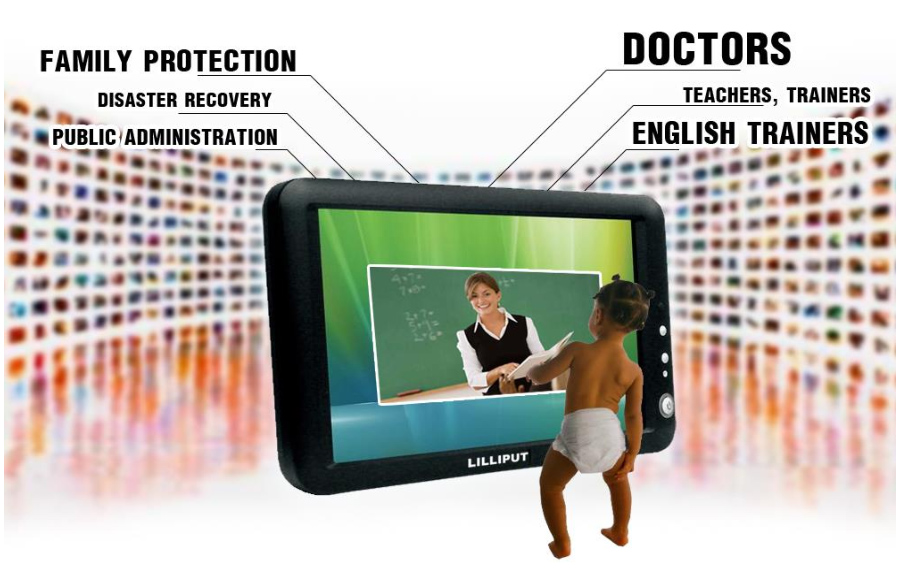
The Concept: A comprehensive ICT-driven social development framework for remote regions in the Global South — designed around the principle that "opening information faucets" through connected devices is the most efficient catalyst for societal development.
The document was produced as a strategic framework for an Indonesian-Papua New Guinean development initiative, arguing that placing multi-functional telecommunications devices in livingrooms and community spaces would trigger cascading positive effects across education, healthcare, cultural integration, and disaster preparedness — all from a single infrastructure investment.
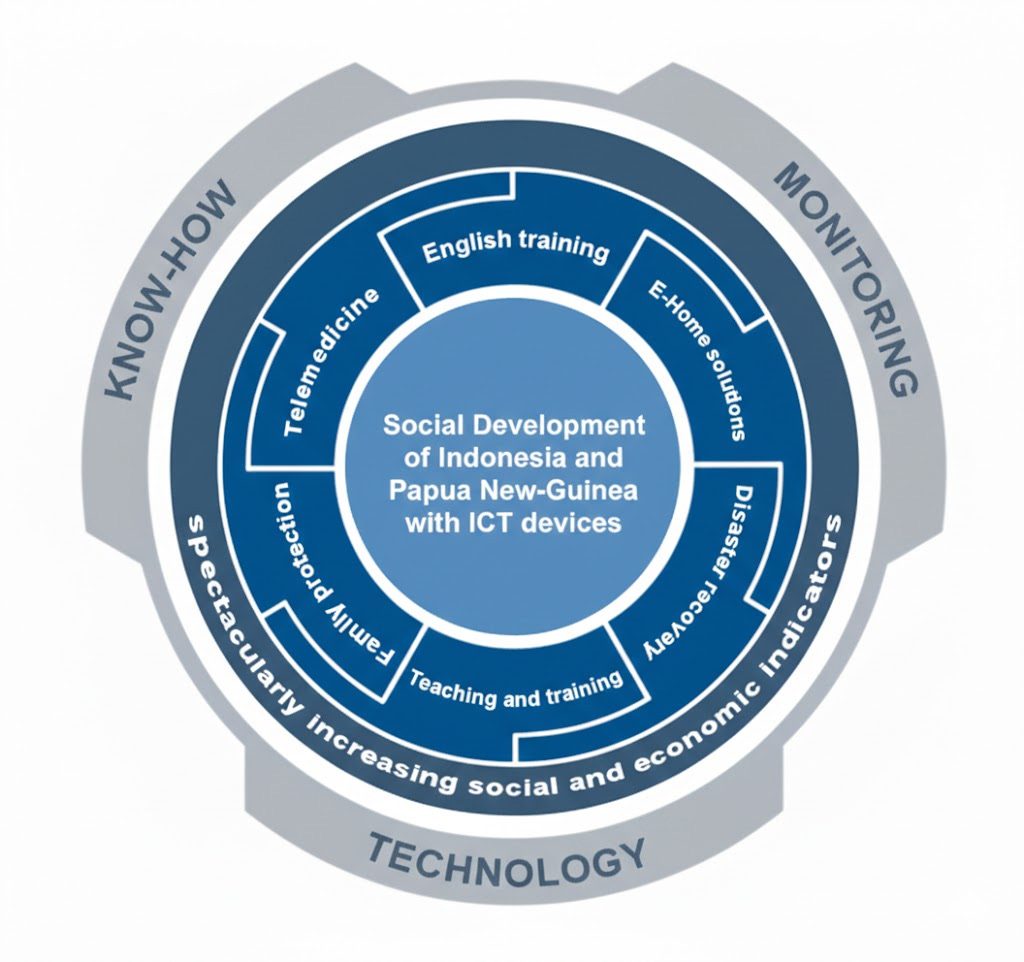
Development Pillars
Language & Communication
ESL-first approach enabling knowledge transfer. Digital language learning as the gateway to all subsequent development layers.
Telemedicine
Remote medical consultation and health monitoring through connected devices — bridging the gap between village communities and specialist healthcare.
Child-Driven Learning
Self-directed education model inspired by Sugata Mitra's "Hole in the Wall" experiments — children as natural technology adopters driving community literacy.
Disaster Early-Warning
Integrated alert systems leveraging the same ICT infrastructure for natural disaster preparedness in a geologically active archipelago.
Research Opportunity
The document explicitly identified the unique research value of these relatively intact societies — communities existing without the benefits and disadvantages of Western-type mindsets. This created an opportunity not only for development, but for multidisciplinary research into new social structures and agreements — measuring development in real-time, studying the interaction between traditional cultures and information technology, and mapping anthropological characteristics with the help of IT.
This perspective — treating societal development as a measurable, instrumentable process rather than a one-directional transfer — is a direct precursor to the 3rd Hemisphere research framework's approach to instrumenting Human-Ai interaction spaces.