The Sphinx of Svalbard
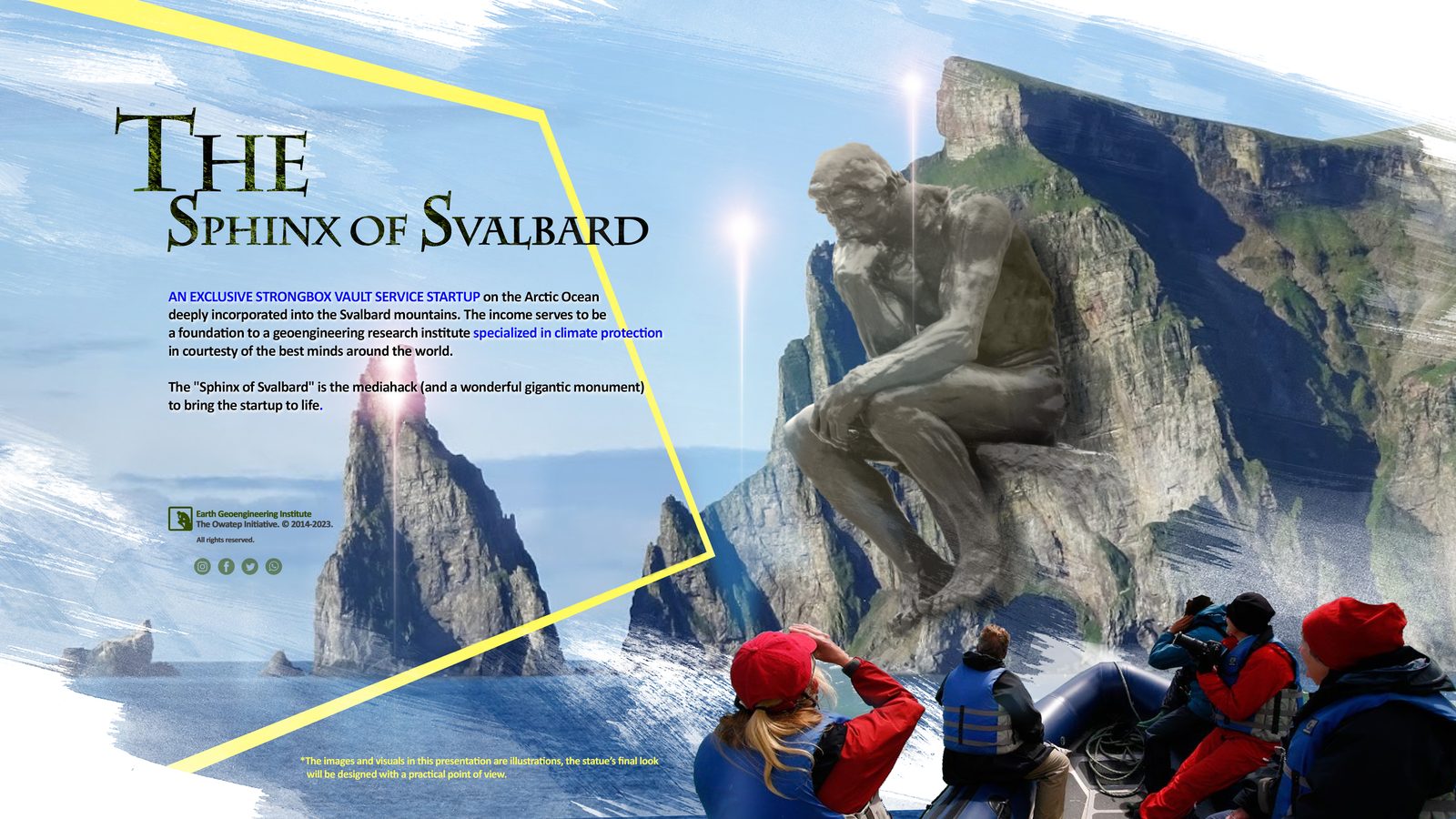
Core Insight: One of the greatest barriers to physical climate intervention is the absence of long-term financing models compatible with market timelines. The Sphinx of Svalbard addresses this by combining two interlocking strategies — a monumental cultural memory bank that generates capital through the Attention Economy, channeled directly into a dedicated geoengineering research institute.
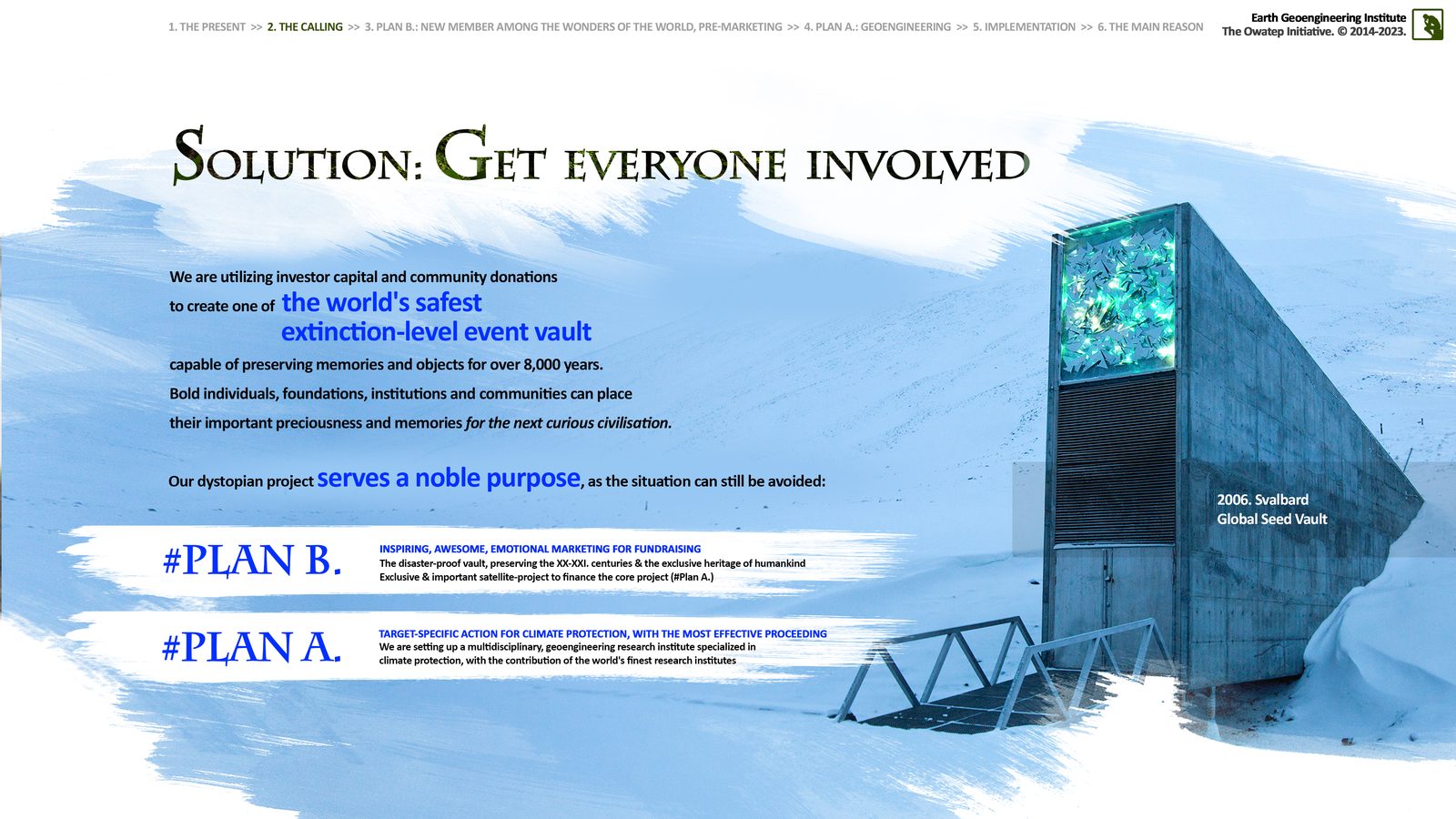
The concept: an exclusive strongbox vault service deeply incorporated into the Svalbard mountains on the Arctic Ocean, capable of preserving memories and objects for over 8,000 years. Bold individuals, foundations, institutions and communities can place their most important possessions and memories for the next curious civilisation.
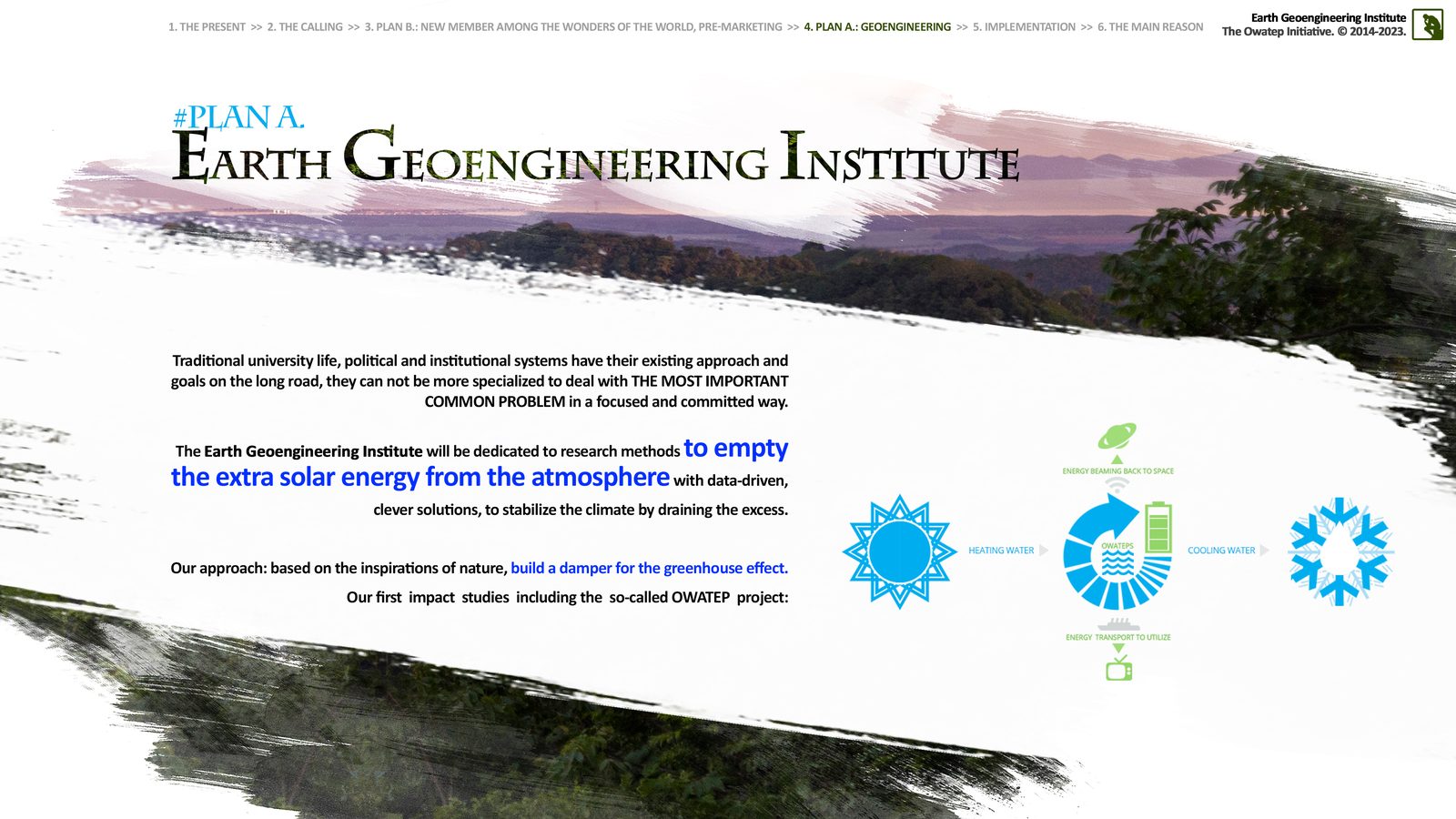
#Plan A — Earth Geoengineering Institute
A multidisciplinary research institute dedicated to methods for draining excess solar energy from the atmosphere — data-driven climate stabilization through technologies like OWATEP.
Traditional institutional systems cannot specialize enough in this single common problem. A dedicated, foundation-backed institute can.
#Plan B — The Time Capsule Vault
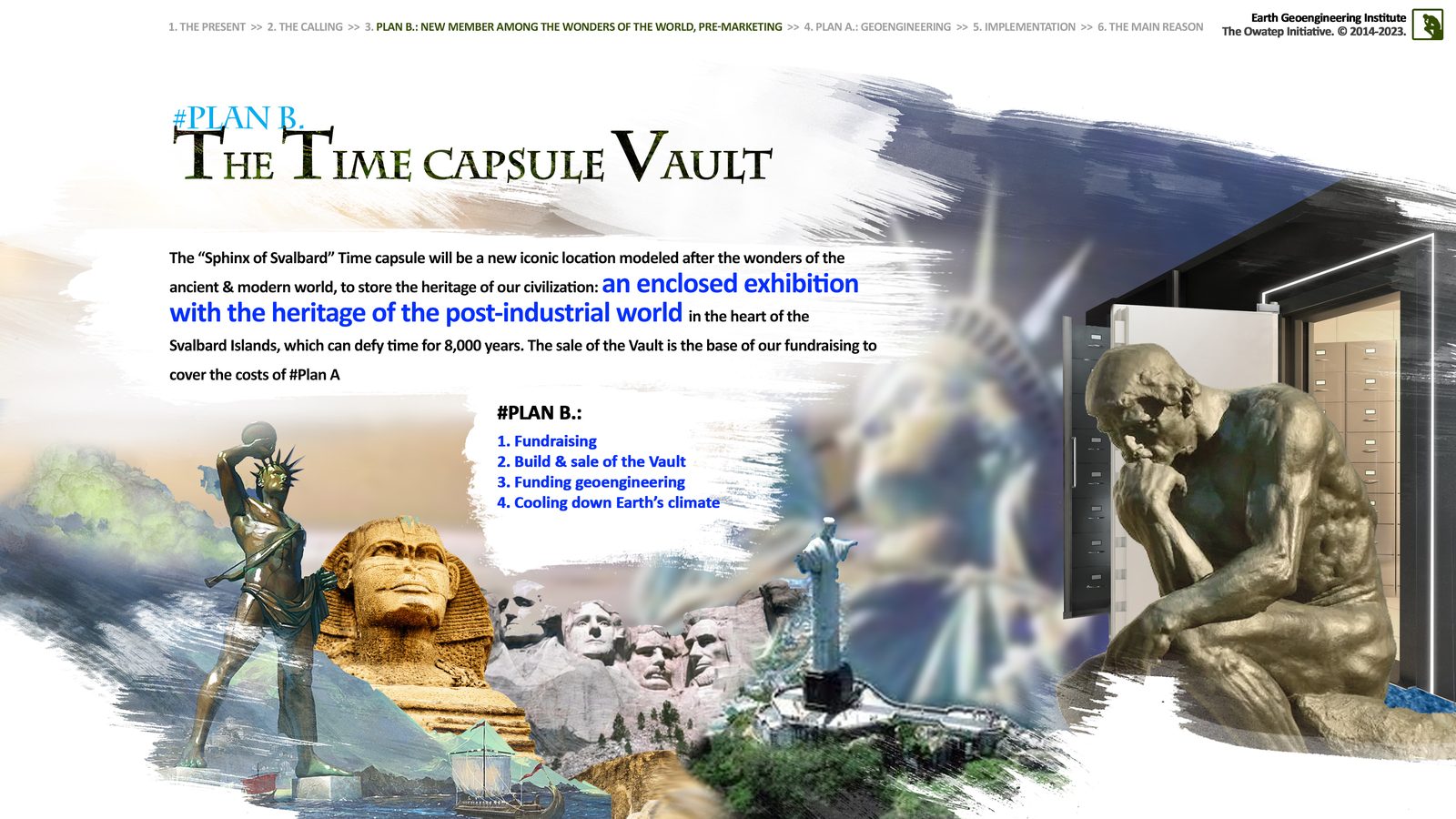
An inspiring, emotionally powerful marketing vehicle: a disaster-proof vault modeled after the Wonders of the World, preserving the heritage of the XX–XXI centuries.
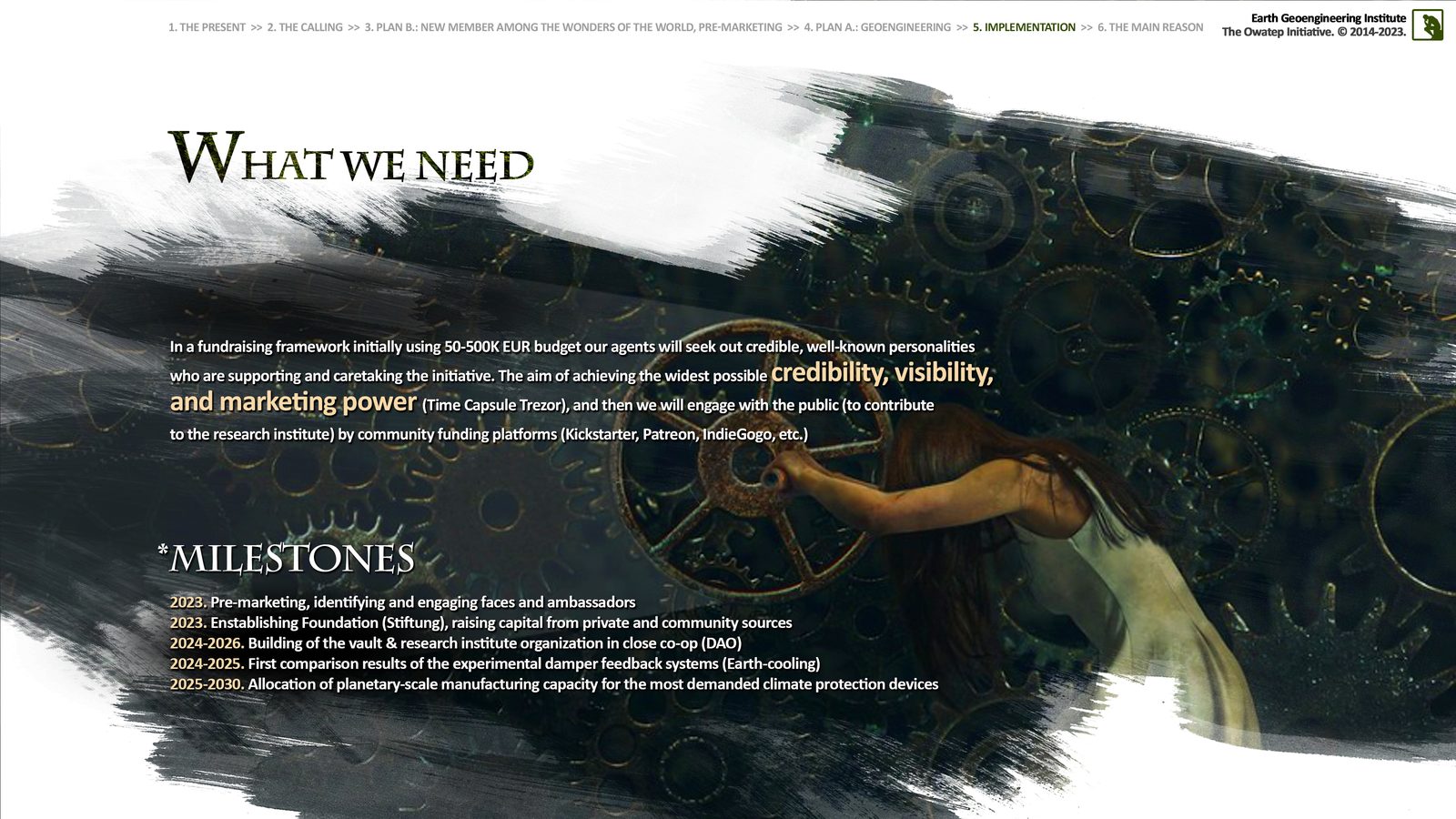
The vault's commercial success finances Plan A. The dystopian project serves a noble purpose — the situation can still be avoided.
Full Presentation Deck

The original presentation contained a hidden philosophical layer: a meditation on the Anthropocene transition, where the Rodin Thinker becomes the metaphor of a "chimera" — the transitional being from flesh-based human to cybernetic organism by information technology. The Sphinx of Svalbard, or Svalbard Colossus could be a monument not just to human thought, but also to the emergence of a merged consciousness.
This prediction was embedded in a presentation about climate geoengineering, six years before the current Human-Ai convergence discourse became mainstream.